
A COMPLETE GUIDE
How to fund an esports arena: a guide for UK schools and colleges
For most institutions, the case for an esports arena comes together quickly. Students are asking for it, a member of staff is ready to run it, and the benefits for engagement and recruitment are clear. Securing the budget is usually the longer part of the journey, and it’s where having the right support makes the biggest difference.
This guide covers the main routes schools and colleges have used to fund their arenas, how we help with that process, and how to put together a case that gets approved.
Main Funding Routes
SKILLS AND CAPITAL FUNDING
Further education colleges can often draw on regional and national skills investment. Esports supports the digital, creative, broadcast and events skills that many local skills priorities call for, which makes it a strong fit when framed around the curriculum it enables.
SCHOOL AND TRUST BUDGETS
Many schools fund their arena from existing capital budgets, sometimes alongside a planned ICT refresh. Multi-academy trusts often go further and create a flagship facility that serves pupils from across the trust.
LOCAL AUTHORITY AND REGIONAL INVESTMENT
Councils and regional bodies with goals around attendance, inclusion, digital skills or regeneration can be receptive to projects that help deliver them. Several of our own arenas have been supported in this way.
SPONSORHIPS AND PARTNERSHIPS
Employers in technology, engineering and digital industries are often keen to reach young people who could become their future apprentices and graduates. Naming rights, branding and access to the space for careers events can make an esports arena an attractive sponsorship opportunity.
How we help you secure funding
We’ve supported schools, colleges and community organisations through the funding process on projects across the UK, so we know what budget holders, governors and funding bodies want to see. We work with you to build the case for your arena, from shaping the specification around your curriculum and outcomes to providing the detail that supports your bid or internal approval.
One of the most effective tools in those conversations is a 3D render of your space. It’s much easier for a governing body, a sponsor or a funding panel to get behind a project when they can see exactly what it will look like in your own room, and a render turns an idea into something people can picture themselves walking into. We produce a custom 3D design with every consultation, free of charge and with no obligation, so you have it ready for the conversations that matter.
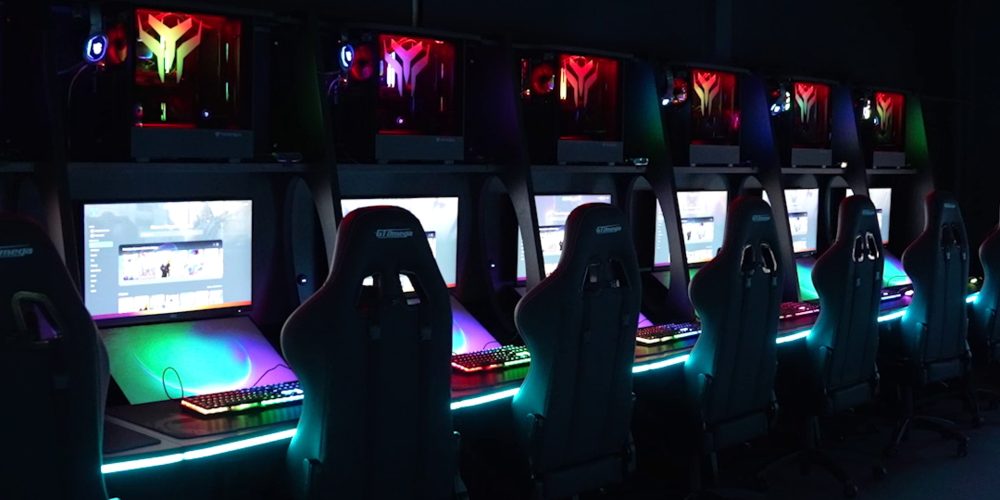
Helping the arena pay its way
Many institutions hire their arena out for community tournaments, holiday camps, coding clubs and private events outside the timetable, and the right management software makes switching between lessons and commercial use straightforward. Including a realistic income projection strengthens a funding bid, because it shows the facility contributing to its own running costs.
Our esports revenue calculator gives you a quick starting estimate based on your plans.
Frequently asked questions
Are there grants specifically for esports arenas?
Dedicated esports grants are rare. Most arenas are funded through broader skills, capital, regeneration or sponsorship routes, where esports qualifies because of the digital and creative skills it supports.
Can you help with our funding application?
Yes. We regularly support institutions in building the case for their arena, including the specification, supporting detail and a 3D design of the finished space.
Is the 3D design really free?
Yes. We produce a custom 3D render of your space with every consultation, free of charge and with no obligation.
Can an esports arena pay for itself?
Hiring the space out for tournaments, camps and events can offset part of the cost over the life of the facility. How much depends on local demand and staffing, so it works best as one part of a wider funding plan.
Can we build an arena in phases?
Yes. Designing the whole room first and installing it in stages is a common way to spread the cost across more than one financial year.